The Book of Ezra
A lesson preparation guide for teaching 5–10 year olds
The Original Audience
What did this mean to the people who first heard it?
Movement 1: The Original Audience -- The Book of Ezra
"What did this mean to the people who first heard it?"
The World Before Ezra Opens
In 586 BC, Nebuchadnezzar's army destroyed Jerusalem, burned Solomon's temple, and deported the surviving population to Babylon. The temple was understood as the literal intersection of heaven and earth -- God's throne room on the planet. Its destruction meant the visible signs of God's presence, his covenant, and his promises were all reduced to ash.
Seventy years passed. To feel the weight: if the exile began in 2026, the return would not happen until 2096. Everyone alive at the start would be dead before it ended. An entire generation was born and died in Babylon having never seen Jerusalem. Without a temple, they developed prayer and Scripture-centered worship -- the precursors of the synagogue.
Cyrus and the Geopolitical Shift
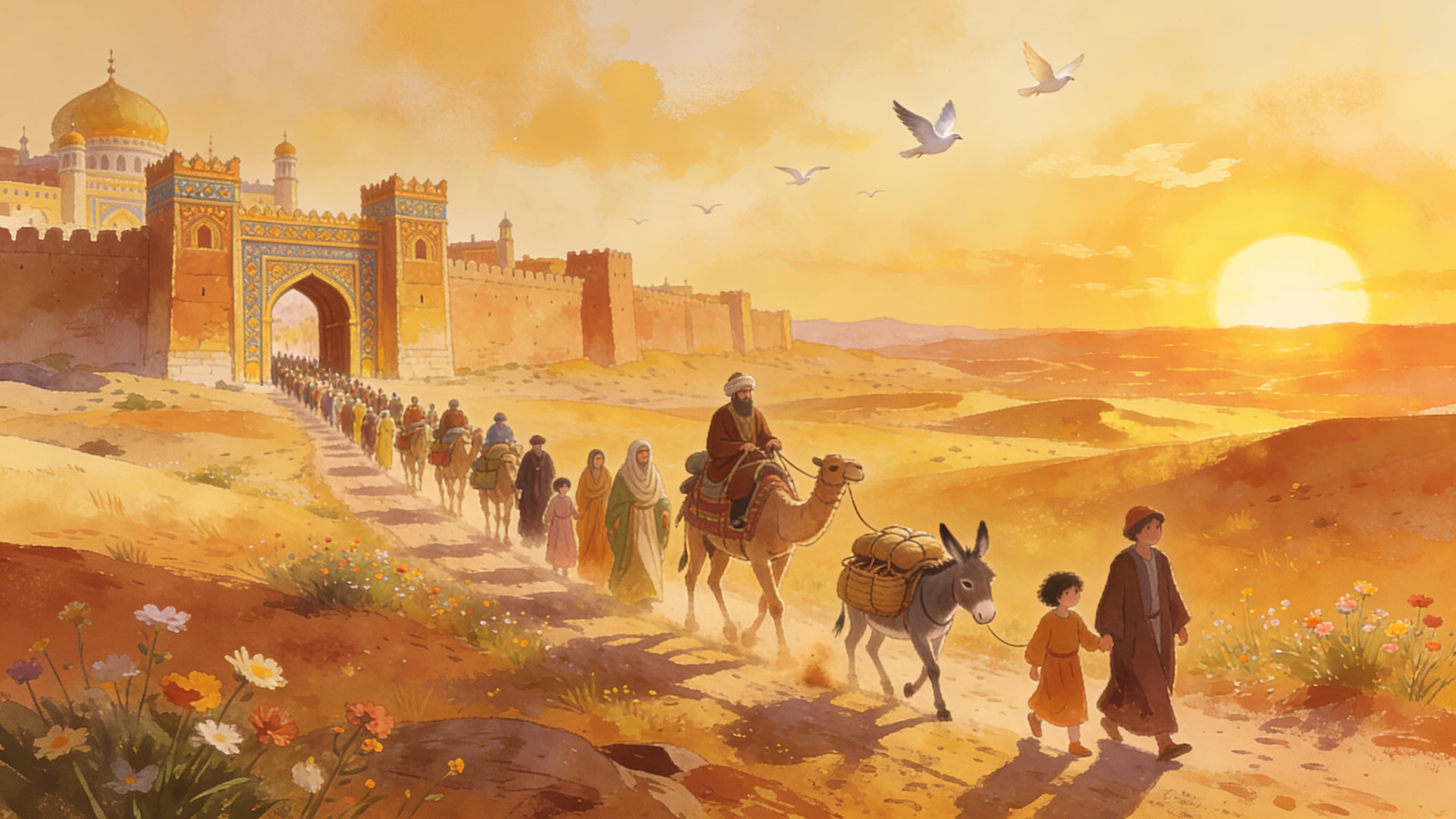
In 539 BC, Cyrus the Great conquered Babylon. In 538 BC, he issued a decree (Ezra 1:2-4) permitting Jewish exiles to return and rebuild the temple, even returning the gold and silver vessels Nebuchadnezzar had looted.
The original audience would have heard something staggering: "the LORD stirred up the spirit of Cyrus" (Ezra 1:1). A pagan emperor, acting as God's instrument. Isaiah had named Cyrus by name generations earlier, calling him God's "anointed" (Isaiah 45:1). The audience would also have caught the Exodus echo: neighbors giving the departing Israelites silver and gold (Ezra 1:4, 6) mirrors Exodus 12:35-36. The author is saying: God is doing it again.
The 80-Year Span
Ezra covers roughly 538-458 BC across three Persian kings and two waves of return:
Wave 1 (538 BC, under Cyrus): Zerubbabel and Jeshua lead about 42,360 people back to a Jerusalem of rubble, poverty, and hostile neighbors. Samaritans offered to help but were rejected because their worship had been corrupted by syncretism (Ezra 4:1-3). Local opposition stalled the project for 16 years. Haggai and Zechariah restarted the effort around 520 BC. Darius found Cyrus's original decree, confirmed it, and the temple was completed in 516 BC.
57-year gap of silence. The events of Esther occur here. The temple stands, but the community drifts.
Wave 2 (458 BC, under Artaxerxes I): Ezra the priest-scribe arrives with extraordinary imperial authority to teach Torah. He was embarrassed to ask for a military escort because he had told Artaxerxes that God protects all who seek him (Ezra 8:22), so he fasted and prayed instead. He then discovers widespread intermarriage and leads communal repentance.
The structure makes a theological argument: rebuilding the building is not enough. The people themselves must be rebuilt. And the 57-year gap tells the audience: God's work is not always continuous or fast, but God is not absent in the silence.
What the Temple Meant
For the original audience, the temple was not a church building. It was the one place on earth where God's manifest presence dwelled. The Holy of Holies was his throne room. When Solomon dedicated the first temple, God's glory filled it so intensely that priests could not stand (1 Kings 8:10-11).
When that temple was destroyed, the question was not "where will we worship?" but "has God abandoned us?" So when Ezra opens with a decree to rebuild, the audience hears: God is making a way for his presence to dwell among us again.
But the second temple lacked the ark of the covenant, the glory cloud, the sacred fire, and the Urim and Thummim. The Holy of Holies was, as far as we know, an empty room.
The Identity Crisis
Pre-exilic Israel had clear markers: a Davidic king, the temple, the land, political sovereignty. After exile, nearly all were gone. No king. A fraction of the land. No independence.
The burning question: What makes us Israel now? Ezra's answer: Torah. The shift from a kingdom defined by a monarch to a community defined by a book is one of the most consequential transitions in biblical history. This shift would prove providential -- when Rome destroyed the second temple in AD 70, the Jewish people already had a portable, text-centered faith that could survive anywhere.
The Emotional Temperature
The original audience lived in contradictory feelings:
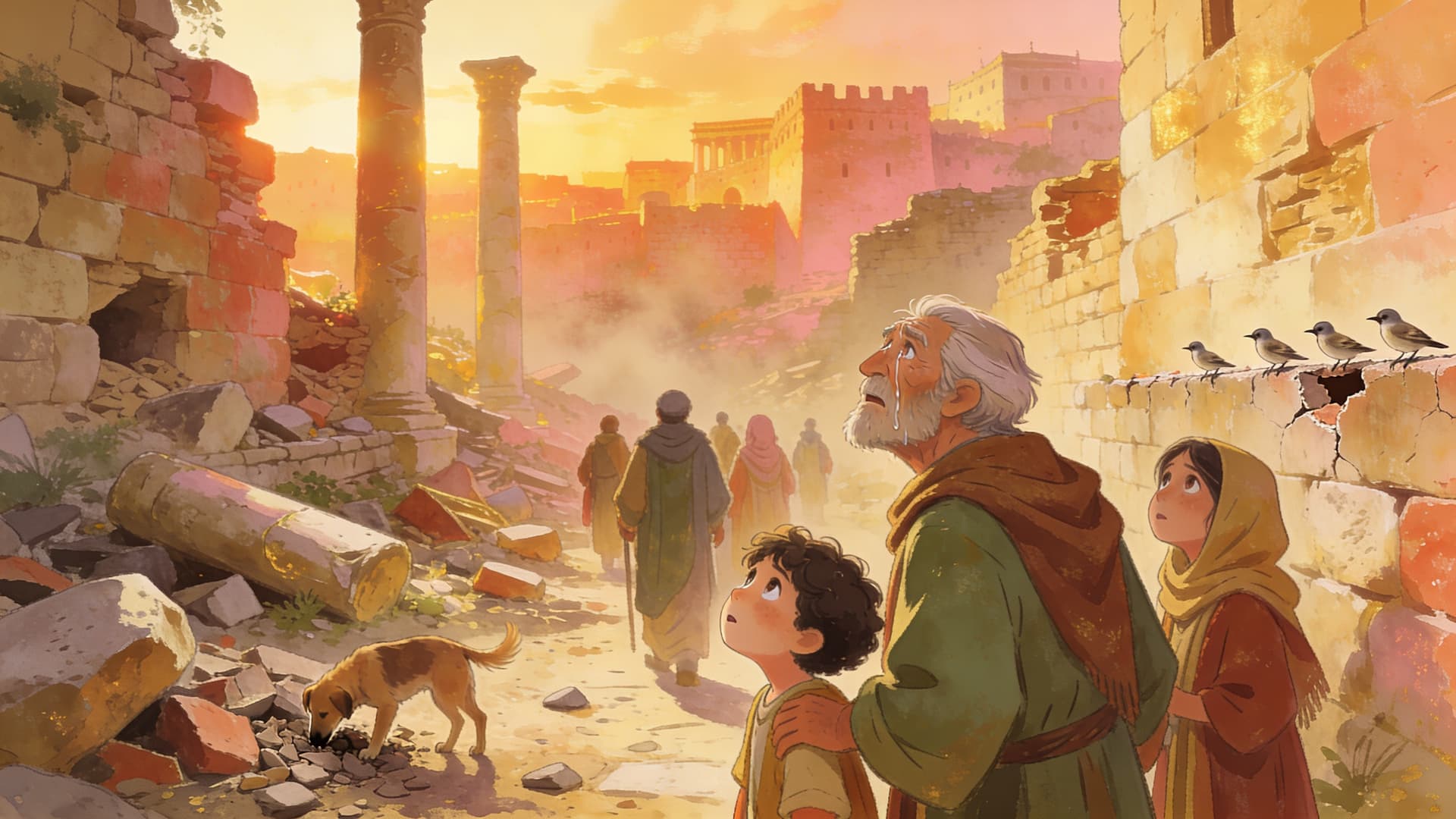
Hope and grief. God kept his promise -- but reality did not match the prophetic dream. When the foundation was laid, old men who remembered Solomon's temple wept while the young shouted with joy (Ezra 3:12-13). The two sounds mixed so completely that no one could tell them apart.
Fear. Opponents wrote letters to the Persian court and succeeded in halting construction for 16 years.
Identity confusion. Many returnees had been born in Babylon. Coming to Jerusalem was not a homecoming -- it was immigration to an unfamiliar place their parents called home.
Shame. Ezra's prayer in chapter 9 uses "we" throughout even though he himself had not intermarried. Their identity was corporate.
"Already but not yet." God's faithfulness was evident -- he brought them back. But the full promise was unrealized: no king, no glory cloud, no sovereignty.
The Intermarriage Crisis
Chapters 9-10 read as ethnic prejudice to modern eyes. The original audience heard something different. The peoples listed in Ezra 9:1 are from Deuteronomy 7:1-4, where God warned against intermarriage because "they will turn your sons from following me." Solomon married foreign wives and they turned his heart (1 Kings 11). That led directly to exile. Now, barely one generation after the return, the same pattern was repeating. This was about survival -- if the community assimilated, the messianic promise would dissolve.
What Makes Ezra's Context Unique
- God works through pagan rulers. Cyrus, Darius, and Artaxerxes all serve God's purposes without knowing him.
- Lists are not filler. The genealogies function like a rescue ship's manifest. Every name is a miracle.
- The temple vessels are a subplot. The looted gold and silver survived exile just as the people survived exile.
- The text is bilingual. Aramaic sections preserve actual Persian correspondence. The author is saying: here are the receipts.
- The return is a new Exodus. God stirs the foreign ruler, the people leave with gold, a leader guides them to the promised land.
The Bottom Line
The original audience was a community living between miracle and disappointment. God had brought them home -- but home did not look the way they expected. They were learning to be God's people in a new way: not as a powerful kingdom, but as a small, faithful community held together by the Word of God and the conviction that he finishes what he starts.
This is a story children can understand. They know what it is like to be small in a big world, to wait for something that feels like it is taking forever, and to discover that getting what you hoped for is both wonderful and different from what you imagined.
The Author’s Intent
What is the author trying to do with this passage?
Movement 2: The Author's Intent -- The Book of Ezra
"What was the author trying to do with this text?"
Who Wrote This and How
Ezra was compiled, not composed like a memoir or oracle. The author (traditionally Ezra himself, possibly a later editor) assembled royal decrees, official correspondence, genealogies, inventory lists, and personal memoir into a deliberate theological argument. Think of it less as authorship and more as curation with a thesis.
The Spirit's inspiration here works through the selection and arrangement of documents. The author's choices about what to include, omit, and order -- that's where the theology lives.
The book's two-part structure -- chapters 1-6 (temple rebuilt under Zerubbabel) and chapters 7-10 (people rebuilt under Ezra) -- is the argument: rebuilding the house of God and rebuilding the people of God are two phases of one restoration.
The 57-year gap between chapters 6 and 7 is the loudest editorial choice. The author chose silence. That gap is not a mistake -- it is an argument.
The Core Arguments
1. "You are still Israel."
The deepest anxiety: Are we still the covenant people? The author's answer is relentless continuity. Ezra's genealogy traces back to Aaron (7:1-5). The full returnee list (chapter 2) lets the community locate itself in an unbroken family line. The original temple vessels physically travel from Solomon's temple through captivity and back. The author is building a chain of custody for Israel's identity.
2. "Holiness is not optional."
The intermarriage crisis sits at the end -- after the temple is rebuilt, worship restored, imperial authorization secured. The architecture says: external restoration without internal purity is incomplete. Covenant faithfulness is the load-bearing wall.
3. "God governs the empires you fear."
Three Persian kings issue favorable decrees. The author frames each as divine orchestration -- "the LORD stirred up the spirit of Cyrus" (1:1), "the eye of their God was on the elders" (5:5), "the hand of the LORD his God was on him" (7:6). For a community with zero political power, the author makes the case that the real power behind thrones is Israel's God.
4. "Worship defines you now."
The altar goes up before the foundation (3:2-3). Festivals resume before walls exist. Passover is celebrated the moment the temple is completed (6:19-22). Without a king, sovereignty, or military strength, worship and Torah are the new center of gravity.
If Haggai says "build the temple," and Nehemiah says "build the walls," the Ezra author says "build the people -- and here are the documents proving you have the right to exist."
The Rhetorical Strategy of Official Documents
The author embeds Persian correspondence in its original Aramaic (4:8-6:18, 7:12-26):
- Credibility. Not paraphrasing -- showing actual receipts.
- Ironic theology. Pagan kings end up confessing truths about Israel's God.
- Legal protection. These documents function as a constitutional archive against local opponents.
Tensions the Author Wants You to Hold
These tensions are left deliberately unresolved. A teacher who smooths them out loses the very thing the author was doing:
- Grace and severity. God mercifully restores a people who broke covenant -- then demands they dissolve marriages that violate that same covenant.
- Empire as instrument and threat. The same empire that funds the temple creates conditions for assimilation.
- Joy and grief as simultaneous worship. The old men weeping and young men shouting (3:12-13) is not a problem the author fixes.
- Individual cost and communal good. Chapter 10's list includes real names of men who divorced foreign wives. The author does not erase the human cost.
- Human effort and divine sovereignty. Ezra fasts and prays instead of requesting soldiers, yet God also moves kings to issue decrees. Both operate simultaneously.
Complete the Sentence
The author wrote Ezra because a fragile community needed documented proof that they were still God's people and that their survival depended not on political power but on covenant faithfulness maintained through worship, purity, and trust in a God who governs empires and works in silence.
The Bottom Line
The author of Ezra is not primarily telling a story. He is building a case. Every document, list, and genealogy is evidence in an argument that says: God has not abandoned you, you are still his people, and the way forward is faithfulness -- even when the results look smaller than the promise.
Seeing God
What does this passage reveal about who God actually is?
Movement 3: Seeing God -- The Book of Ezra
"What does this passage show us about God's beauty, glory, or character that we wouldn't see without it?"
The God Who Works Through Paperwork
Ezra's most surprising portrait of God: he accomplishes redemption through royal decrees, tax exemptions, archival searches, and bureaucratic memos. No burning bush. No pillar of fire. God delivers his people through administrative process.
This is not a lesser form of divine action. The same God who split the Red Sea now splits open a filing cabinet in the Persian archives -- and the effect is the same: his people go free.
If kids only know how to see God in the spectacular, they will miss him in the everyday. God-in-the-paperwork means no part of life is outside his reach.
The God Who Stirs
"The LORD stirred up the spirit of Cyrus" (1:1) -- the Hebrew he'ir, to rouse, to awaken. God does not override Cyrus's will. He stirs him. Cyrus makes a real decision consistent with his own imperial policy, yet the author insists God is behind it. A sovereignty so confident it does not need to announce itself.
The God of Quiet Sovereignty
Ezra contains zero miracles, zero theophanies, zero angelic visitations. The phrase that recurs instead: "the hand of our God was on us" (7:6, 9, 28; 8:18, 22, 31). Felt presence without visible manifestation.
The God of Ezra is not less powerful than the God of Exodus. He is the same God choosing a different mode -- one that reveals he does not need miracles to be present. His ordinary providence is just as much "God acting" as fire from heaven.
The God Who Brings You Home
The return from exile is not just rescue -- it is restoration. God does not merely extract his people from danger. He returns them to the specific place, with the specific vessels, to rebuild the specific house. He funds the project, provides leadership, re-establishes worship, sends a teacher.
A rescue God saves you from. A restoration God saves you for. Ezra's God insists on wholeness -- the rebuilt altar, the restored festivals, the recovered identity. He does not stop at survival.
The God Who Endures the Diminished Version
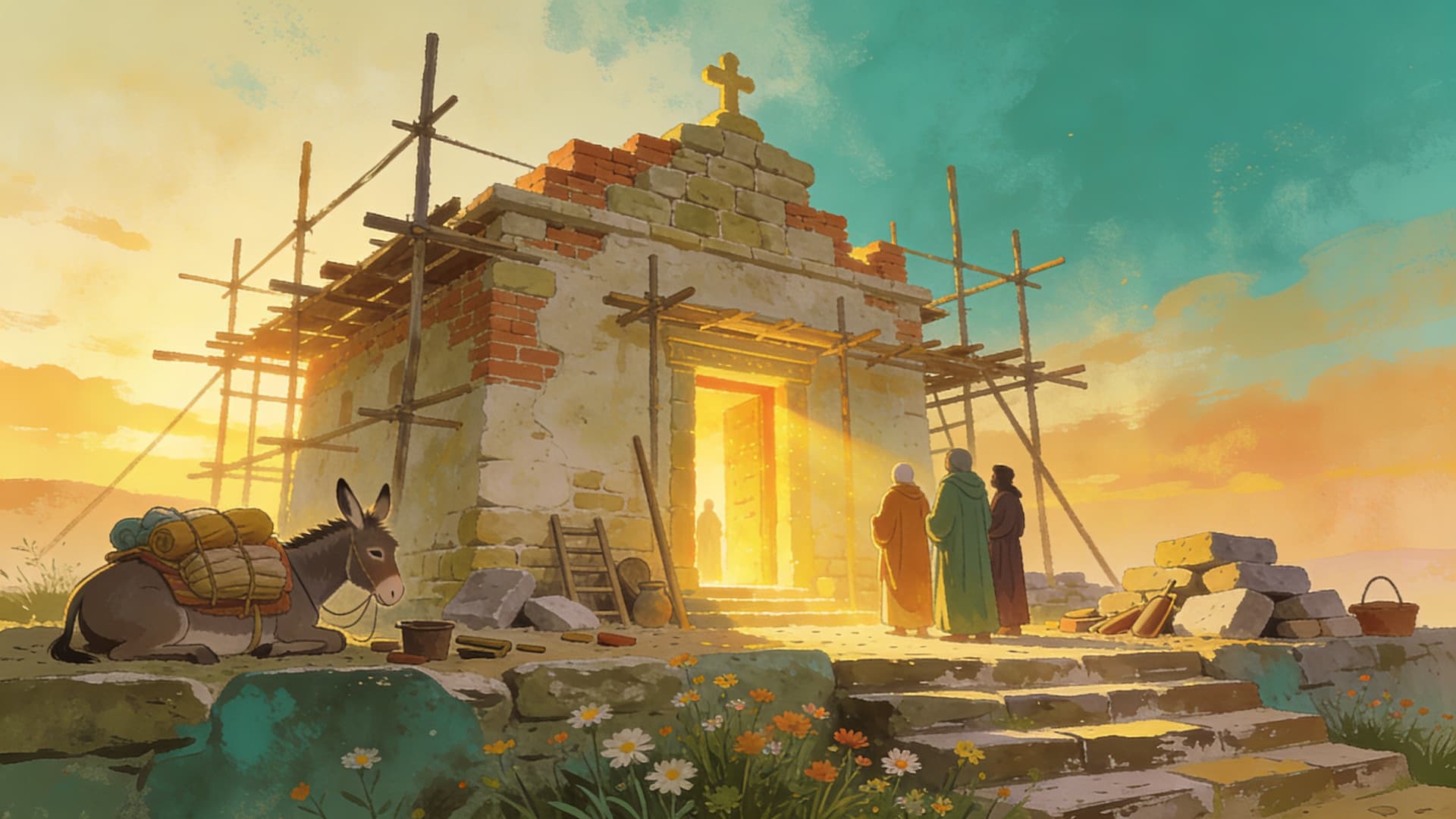
God moves into the second temple. The one without the ark. Without the glory cloud. The one that made old men weep. God does not wait for the perfect version. He consecrates what is offered. He meets his people in their smaller-than-hoped-for reality.
This is divine condescension -- God stooping to meet his people where they actually are. The same impulse that will eventually lead to a stable in Bethlehem.
The God Who Waits Fifty-Seven Years
The silence between chapters 6 and 7 reveals God's patience. He completes the temple in 516 BC, then waits more than half a century before sending Ezra. From inside the gap, it looks like absence. From the far side -- where Ezra arrives with exactly the authority needed at exactly the moment needed -- it looks like precision.
The God Who Is Grieved by Repetition
Ezra's prayer in chapter 9: the exile happened because of unfaithfulness. God brought them back. Almost immediately, the same pattern reasserts itself. The God revealed here is not stoic -- he grieves repetition. He rescues and then watches the rescued drift toward the very patterns that made rescue necessary.
The God Who Insists on Names
The long lists -- returnee rosters, priestly genealogies, even the list of men who had intermarried -- reveal a God who counts individuals. Not just "Israel returned." These specific families. These specific sons. God does not deal in crowds. He deals in persons.
What Ezra Uniquely Shows About God
God's commitment to rebuilding what sin has broken, using whatever instruments are available, over however long it takes, without requiring spectacular means. No other book shows God working so thoroughly through pagan governance or presents divine action so entirely stripped of the miraculous. This is Ezra's irreplaceable contribution: the God of the ordinary Tuesday, the God of the long wait, the God who is no less God when the glory cloud does not appear.
The Bottom Line
Ezra reveals a God whose beauty is quiet, whose sovereignty is invisible, and whose love expresses itself in the long, unglamorous work of rebuilding. He is the God who brings you home -- not just out of exile, but into worship, identity, community, and wholeness.
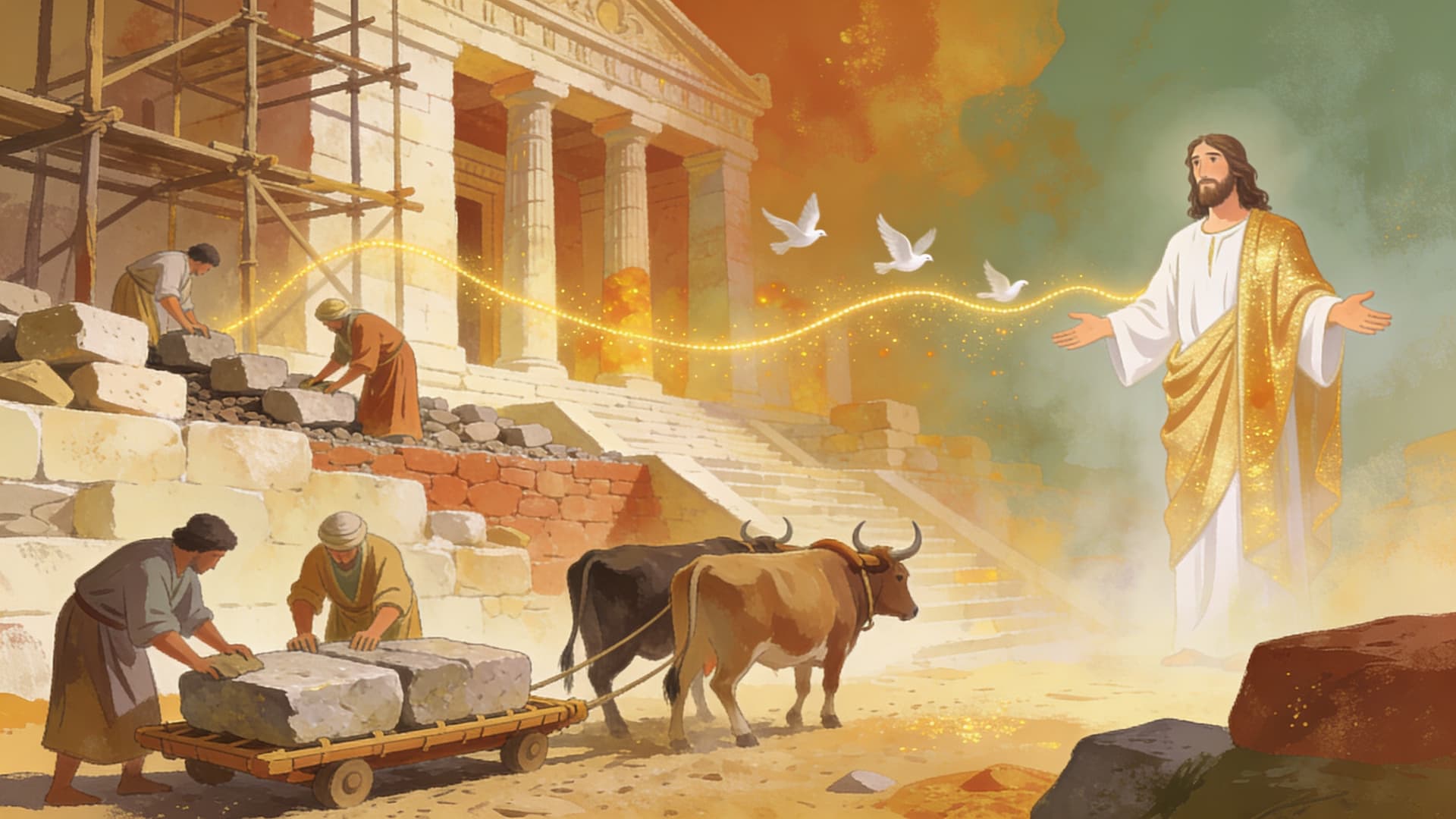
Gospel Connection
How does this passage connect to the gospel?
Movement 4: The Specific Gospel Connection -- The Book of Ezra
"How does Jesus fulfill, complete, or embody what this passage reveals -- SPECIFICALLY, not generically?"
The Rule
Every connection below must pass one test: could you swap in a different OT book and make the same point? If yes, the connection is too generic. Movement 4 asks what is true of Jesus because of Ezra specifically.
Jesus as the True Return from Exile
The returnees came back to the land but found home did not feel like home -- ruins, a diminished temple, an empty throne. They were home geographically but still exiled experientially.
Jesus reads Isaiah 61 in Nazareth and says, "Today this Scripture has been fulfilled" (Luke 4:21). He is not offering another partial return. He is claiming to be the return itself. When he tells Zacchaeus, "Today salvation has come to this house" (Luke 19:9), the word carries the full weight of homecoming.
Ezra's return got the people to Jerusalem. Jesus's arrival means God has come to wherever you are. The geography of homecoming has become a person.
Jesus as the True Temple
God moved into a temple without the ark, without the glory cloud, without the sacred fire. An empty Holy of Holies. "The Word became flesh and dwelt among us" (John 1:14) -- eskenosen, literally "tabernacled." The intersection of heaven and earth that the temple was built to be is now walking around Galilee. When Jesus says, "Destroy this temple, and in three days I will raise it up" (John 2:19), the empty Holy of Holies finally has its occupant.
The diminished temple was never the destination. It was a placeholder for the One in whom "all the fullness of God was pleased to dwell" (Colossians 1:19).
Jesus as the True Anointed One
God "stirred the spirit" of Cyrus -- a pagan king Isaiah called God's "anointed" (Isaiah 45:1). Cyrus was anointed but did not know God. Jesus is anointed and is God. Cyrus freed captives from Babylon. Jesus frees captives from sin and death. Cyrus funded the temple with imperial treasury. Jesus builds the new temple -- his people -- at the cost of his own life.
Jesus as the True Priest-Scribe
Ezra was "a scribe skilled in the Law of Moses" (7:6) and a priest descended from Aaron. He taught Torah, interceded before God, and prayed a corporate confession saying "we" when he could have said "they."
Jesus carries this dual role to completion. He teaches with authority "not as their scribes" (Matthew 7:29). And he does not merely identify with sinners verbally -- "He who knew no sin became sin for us" (2 Corinthians 5:21). Ezra said "we" in his prayer. Jesus said "we" with his body.
Ezra tore his garment in grief over the people's sin. Jesus had his garment torn from him as he bore the people's sin.
The Intermarriage Crisis and the New Heart
The intermarriage solution in Ezra 10 -- divorce the foreign wives -- is agonizing. It solves the external problem but cannot touch the internal one. Hearts are not changed by policy. Ezra's prayer essentially says: our hearts are the problem, and we cannot fix our own hearts.
Jesus does not solve it by enforcing stricter boundaries. He removes the need for them. "I will give you a new heart" (Ezekiel 36:26) is what Jesus accomplishes. The new covenant writes the law internally. And the result is not a smaller community but a larger one: every nation brought into the covenant rather than kept out. The painful irony of Ezra 10 -- covenant purity required sending away Gentiles -- is reversed by a gospel where purity means welcoming them in (Ephesians 2:14).
The New Exodus Completed
The author shaped Ezra with deliberate Exodus echoes: God stirs the foreign ruler, people leave with silver and gold, a leader guides them through danger. But like the original, this exodus was incomplete.
Luke calls the cross an "exodus" (Luke 9:31 -- Greek exodon). Each deliverance is larger than the last: the first freed bodies from slavery, the second freed a community from displacement, the third frees the human condition from the bondage behind every exile. Ezra's exodus stands in the middle -- too late to be the first word and too early to be the last.
Every partial exodus in Scripture is a promise that God will eventually accomplish the full one. Ezra's return was the second installment. Jesus is the final payment.
The Temple Vessels and the Hand of God
The gold vessels survived exile, were carefully inventoried, and returned to service. Jesus is the vessel that survives the ultimate exile -- descending into death and returning intact, transformed. "We have this treasure in jars of clay" (2 Corinthians 4:7).
Ezra's signature phrase -- "the hand of our God was on us" -- described felt but unseen presence. In Jesus, the hand becomes visible. He touches lepers and they are clean. He takes a dead girl by the hand and she rises. "Anyone who has seen me has seen the Father" (John 14:9).
Where Every Ezra Promise Arrives
- The return from exile → a world with no exile. "God dwells with his people" (Revelation 21:3).
- The rebuilt temple → a city needing no temple, "for its temple is the Lord God and the Lamb" (Revelation 21:22).
- The names on the lists → the Lamb's book of life. Not a single name lost.
- The weeping and shouting → "He will wipe away every tear" (Revelation 21:4).
- The 57-year silence → God's presence immediate and uninterrupted. No more gaps.
The Anti-Moralism Checkpoint
Test every lesson against these traps:
- "Be brave like Ezra." Misses that Ezra's courage came from "the hand of the LORD his God was on him."
- "Don't marry the wrong person." Flattens a covenantal crisis into a morality tale and misses the gospel trajectory.
- "God helps those who help themselves." Ezra explicitly contradicts this -- he fasted and prayed instead of requesting soldiers.
- Generic Jesus tack-on. If your lesson could end with "...and that is why Jesus died for our sins" pasted onto any book, you have not reached Ezra's specific connection. Jesus is the true temple for people aching over a diminished one. He is the true homecoming for people still exiled. He is the new heart for people who cannot stop repeating failures.
The Bottom Line
Ezra's story is partial fulfillments -- a partial return, a partial temple, a partial reformation. Jesus does not discard these. He completes them. The return becomes permanent homecoming. The temple becomes a living person. The priest-scribe's "we" becomes actual substitution. The invisible hand becomes a touchable body. And the destination is the new earth, where God dwells with his people face to face, and every name on every list is home.

Why Kids Care
How does this truth intersect with their actual lives?
Movement 5: Why Should a 5-10 Year Old Care? -- The Book of Ezra
"What does this mean for their actual lives of play, fun, friendship, and family?"
The Shift
Movements 1-4 are teacher preparation. Now all of it has to land in the life of a child who lost a tooth this week. Moralism gives kids a task. The gospel gives kids a God. Everything below must give them a God.
The Lesson: Three "Not Enoughs"
Have kids act out a simplified version of the story, then pull out the gospel through questions afterward. More engaging than a video, gets to the main point more directly than metaphors, and involves more kids.
The Arc
Three things God did for his people in Ezra. Each one is good. Each one is real. And each one is not enough -- because God wants MORE for us.
1. "It is not enough to just be rescued." God changed King Cyrus's heart and freed his people. That is amazing. But he did not rescue them just to live in their old city again. He wanted more.
2. "It is not enough to just be forgiven." The people rebuilt the altar and offered sacrifices. Their sins were covered. That is amazing. But God did not forgive them just so they could stop feeling guilty. He wanted more.
3. "It is not enough to just have a place of worship." They rebuilt the temple. But when Solomon built the first one, God's glory -- fire and cloud -- filled the whole place. This time? Nothing. The temple was finished and God did not send his glory. Why?
Because he was preparing something better. He was going to live in PEOPLE. Jesus became the temple. And when Jesus sent the Holy Spirit, God moved into every person who trusts him. Not a building you visit. A friend who lives inside you -- always with you, always listening, always paying attention, and always giving you what your heart truly needs.
The Role Play
Cast generously -- the teacher narrates while kids follow cues.
Characters: God (narrator/teacher), King Cyrus, Israelites (as many kids as want to participate), Ezra (optional).
Scene 1 -- Rescue: Israelites on one side ("Babylon"). Teacher (as God) whispers to Cyrus. Cyrus announces: "You can go home!" Israelites walk to "Jerusalem." Pause: "Is this enough?"
Scene 2 -- Forgiveness: Israelites build an altar (stack blocks/cups). Teacher: "They offered sacrifices -- the way God taught them to be forgiven." Pause: "Is this enough?"
Scene 3 -- Temple Without Glory: Israelites build the temple (bigger structure). "When Solomon built the first one, God's glory filled it so thick priests couldn't stand. But this time..." Long pause. Nothing happens. "Why didn't God fill this temple?"
The Reveal: "God was preparing something better. Instead of filling a building, he was going to fill PEOPLE. Jesus was God in a human body. And the Holy Spirit means God is WITH you. Always."
Why Should They Care?
"You are not just rescued. Not just forgiven. You have a friend -- the best friend -- who is always with you. Always has time for you. Always listens. Never gets bored of you. And he gives you what your heart truly desires."
Follow-Up Questions
- "Which 'not enough' surprised you most?"
- "What is the difference between God living in a building and God living in you?"
- "If God is always with you through the Holy Spirit -- what does that change about scary moments? Lonely moments?"
- "Why is a friend who is always with you better than a building you visit sometimes?"
Age Notes
Younger (5-6): Keep the role play physical and simple. Let as many kids as possible participate. The "nothing happens" pause in Scene 3 lands powerfully. Landing: "God wanted to live in YOU, not in a building."
Older (8-10): Push deeper with follow-up questions. Let them wrestle with "why didn't God fill the temple?" before giving the answer. They can grasp that the Holy Spirit is not a feeling but a person.
Alternative: Object Lessons
If standalone demonstrations work better for your format, these each teach a specific Ezra truth. They can supplement the role play or stand alone.
1. The Magnet Under the Table (God Stirs Hearts). Strong magnet under cardboard moves a paper clip on top. "King Cyrus thought it was his own idea. But God was moving his heart from underneath." Anchor: Ezra 1:1.
2. The Lego Box vs. the Actual Build (The Disappointing Temple). Show a Lego box picture, then a tiny underwhelming model. "Some people shouted. Some cried. God moved into the little one." Anchor: Ezra 3:12-13.
3. Build While I Bother You (Opposition). Give a child a stacking task. Playfully distract them. Let them finish. "God's people were trying to rebuild and their neighbors kept trying to stop them. It worked for a while. But God was stronger." Anchor: Ezra 4-6.
4. The Way Home (God Behind the Scenes + Gospel). Two magnets on a whiteboard -- one front, one back. Draw Babylon and Jerusalem with scribbles between. Move the back magnet and the front one slides across, erasing the mess. "God was invisible but he cleared the way home. That is what Jesus does with sin." Anchor: Ezra 1:1, 8:22. Optional: do it twice -- first pass partial (Ezra), second pass complete (Jesus).
What to Skip
- Genealogies. One sentence: "God wanted to remember every single person. Your name matters to God too."
- Intermarriage details. Reframe: "Some of them started drifting away from God again. Ezra was upset because the same thing that got them in trouble was happening again."
- Political machinations. Reduce to: "Neighbors wrote letters to the king to shut the building down. It worked for a while. Then a new king found the original permission."
- Aramaic sections. Ignore. If asked: "Part of the book was in a different language because it was copying the actual royal letters."
Landing Statements
Format: God is/does ___. And because of that, you ___.
- "God keeps every promise, even when it takes longer than you can imagine. You can trust him with the things you are still waiting for."
- "God is strong enough to use kings and letters and ordinary things. You do not have to be powerful for God to work through your life."
- "God moved into the disappointing temple. You never have to be perfect for God to be with you."
- "God is always working, even when you cannot see it. The quiet seasons are not empty."
- "Nobody could stop God from finishing what he started. Nobody can stop what God is doing in you."
- "God's hand was on Ezra even though Ezra could not see it. You can be brave because God's hand is on you too."
- "Being rescued was not enough. Being forgiven was not enough. God wanted to live inside you -- to be your friend forever. You are never alone."
Teacher Quick Reference
Themes Already in Kids' World
- Coming home after being away. Camp, grandparent's house, hospital. Ezra is a coming-home story.
- Building something that doesn't turn out right. The Lego box vs. what you build. The second temple was real, good, and disappointing.
- Sad and happy at the same time. Ezra 3:12-13 is the last day of summer camp.
- Someone working behind the scenes. A parent who arranged the playdate, packed the lunch. God's invisible hand.
- Trying to do something good and someone trying to stop you. Ezra 4 maps to being mocked for doing the right thing.
- Waiting forever. Fifty-seven years is abstract. But "a really long time" is not.
Framing Sentences
- Sovereignty through paperwork: "God didn't use a magic trick. He used a king's letter. God can use anything -- even boring stuff -- to do amazing things."
- Stirred hearts: "God gave King Cyrus a feeling inside -- like when you suddenly really want to do something kind and you're not sure why."
- The diminished temple: "The new temple wasn't as big or beautiful. But God didn't say 'not good enough.' He moved right in."
- The 57-year gap: "Sometimes God is working and you can't see it yet. Like a seed underground."
- Opposition: "When you try to do something good, people might try to stop you. But God was stronger."
- The hand of God: "They kept saying 'the hand of our God was on us.' They couldn't see it. But they could feel it."
Kid Questions
"Why did God let his people get taken away?" "They had been turning away from him for a long time. The exile was the consequence. But God never stopped loving them and already had a plan."
"Why did God use a king who didn't believe in him?" "God is so powerful he can work through anyone. Cyrus thought it was his own idea. But God put that idea in his heart."
"Why did some people cry when the temple was built?" "The old people remembered the first temple. The new one was much smaller. They cried because they missed what was lost. But both the crying and the cheering were right."
"Did God talk to them out loud?" "Not in Ezra. No miracles, no voice from heaven. They just kept saying 'God's hand was on us.' That's what it's like for us most of the time too."
"Is God still working right now?" "Yes. God worked for seventy years before anyone saw results. Right now he's working in your life, and one day you'll look back and see his hand was there the whole time."
Age Differentiation
Younger (5-6)
- Act out the journey. Cross the room carrying gold cups (temple vessels).
- Build and destroy and rebuild with blocks.
- Hand-on-shoulder blindfolded walk.
- Name tags on a poster -- "God keeps a list. Your name matters."
Older (8-10)
- "Would you rather" discussions: huge empty house vs. tiny house with your family? (leads into diminished temple)
- Two-minute silence exercise. "That felt like forever. God's people waited 57 years."
- Debate: "Was Ezra brave or foolish not to ask for soldiers?"
- Opposition brainstorm: "What tries to stop you from following God?" Write on board, then write GOD IS STRONGER across it.
The Bottom Line
Ezra gives children a God who works in the ordinary, shows up in the disappointing, keeps promises across impossibly long timescales, and cannot be stopped. The temptation will be moral lessons: be brave, be patient, keep trying. Resist that. The bravery, patience, and perseverance in Ezra all come from one source -- the hand of God on ordinary people. Give them that hand. A child who knows God's hand is on them will be braver than a child who was told to be brave.